Introduction
On 27 April 2002, the Urhobo Progress Union (UPU) launched a
well-attended one billion naira “Development Fund” at
Effurun. The reporter who covered the event, Abraham Ogbodo (The Guardian
on Sunday May 5, 2002), poignantly remarked that the ceremony was held
in “the yet-to-be completed school hall of Urhobo College
Effurun”. UCE, as we simply refer to it (motto:
aut optimum aut nihil: either the best or nothing), is among
the best known schools of its type founded in Nigeria in the 1940s to
provide avenues for the educational advancement of the talented young
in their respective communities. Urhobo College Effurun
continues to fulfill this aim, and it stands today as the flagship of
secondary schools in Urhoboland. The Urhobo College Assembly
Hall where the UPU held the fund-raising ceremony was built from
individual contributions of members of Urhobo College Old Students
Association (UCOSA) when the late Edo State-born Dr. A. U. Salami was
its president. UCOSA brought the hall (uncompleted now for more
than twenty five years) to the present stage where it could be hired
by the UPU for the launching of its development fund. But,
remarkably, Urhobo College Effurun does not feature in the development
plans of the UPU!
Why is this the case? Granted that the college was taken
over by governments in the madness of the oil boom years of the
1970s; still this institution bears the name of the Urhobo nation and
stands, it can be argued, as the most outstanding and positive
achievement of the UPU in its seventy-year history. Urhobo
College is also the institution to which is linked the name,
Mukoro Mowoe,
who without doubt, is the most revered leader the Urhobo nation has
produced. As The Guardian newspaper reporter put
it: Urhobo College “became a springboard for the
intellectual empowerment of Urhobo youths… the net result is
that Urhobo land which could not produce a Cambridge matriculant in
the 1930s and early 1940s, is today a major contributor to the
nation’s intelligentsia and in fact global
scholarship”. Urhobo College Effurun symbolises Urhobo
resilience, independence of spirit, determination and what the Urhobo
nation can achieve when the people work together. These are
reasons why the College should feature prominently in Urhobo national
development plans. In Nigeria’s present environment of private enterprise the government
finally recognized its foolishness, and is now begging to hand
over the schools it took over to their original proprietors. Now
that good quality secondary schools are big business, has the UPU
seriously considered taking back the proprietorship of Urhobo
College Effurun? If it has not, then it should, to start with, by
setting up a high-powered committee to seriously look into its
feasibility.
Urhobo College Effurun and Urhobo Interethnic Relations
At one level, the relationship between the Urhobo nation and its
Itsekiri and Ijaw
neighbours in Warri is one
characterised by conflict. At a personal
level, the various peoples are closely interwoven, having intermarried
extensively for many decades. So, it would have been obvious to the
UPU that Urhobo College Effurun could not be an exclusively
“Urhobo” institution. The founders did not intend it, in
staff and student composition, to be an ethnic institution. That may seem an odd thing to say about a college founded and funded
by the UPU and named “Urhobo
College”. The evidence from early student
admission and staff recruitment policies clearly suggests that Urhobo
College was “Urhobo” only to the extent that the school
was Urhobo home grown; it was UPU-inspired from conception, staff
development, funding to building of infrastructure (including the land
on which the college is built); there was no missionary influence, no
expatriates, no corporate or profit motives, no governments. Beyond that the founding fathers were more intent in the quality of
the staff and students of Urhobo College Effurun than in their ethnic
origins. Of course being on Effurun soil,
Urhobo boys (and later girls as well) were at a ‘catchment’ area advantage over other ethnic groups, but there was no
evidence of active exclusion of other nationalities in student
admission. In other words right from
inception, the founders operated an open multi-ethnic institution. Two
some notable examples may be cited as illustration.
Two early recipients of the UPU-sponsored undergraduate scholarships
(meant for talented secondary school graduates to go to the University
College Ibadan and return to teach at the college) were S.J.
Okudu and T. N.
Tamuno, who years later became,
respectively, Registrar and Vice-Chancellor of Nigeria’s premier
University of
Ibadan. They were both
Ijaw, one from the Western and the other
from the Eastern region. Okudu returned to UCE to teach in
fulfillment of his scholarship bond and rose to the post of
Vice-Principal. Okudu later returned to
U.I. where his talents as university administrator were immediately
evident. Importantly, Chief S. J.
Okudu became the Foundation Pro-Chancellor
and Chairman of the governing Council of the new
Delta
State
University, Abraka. Tekena. N.
Tamuno having had a brilliant
undergraduate career in history at the University College Ibadan, went
on to distinguish himself as an academic and he is today one of
Nigeria’s most important men of letters. The Senior Tutor and History Master when I entered Urhobo College
Effurun in 1951 was no other than Chief
Ikime, from
Eastern Urhobo, now
Isoko. Chief
Ikime is the elder brother of the
brilliant
Ibadan historian,
Professor Obaro
Ikime. The
issue of whether Urhobo College Effurun was
conceptualised as an ethnic institution is
worthy of reflection. If for nothing else,
it enables me to suggest that the founding fathers of UCE and the
school itself contributed to interethnic harmony in the 1950s, at a
time when interethnic tensions were already rising in the Warri
area. I think it is a pity that the early
products of UCE, many of whom are now senior citizens and still very
much around and willing to play a mediator role, have not been pressed
into service at attempts to resolve the various crises in the Warri
area.
Multiethnic Student Body of Urhobo College Effurun
The late Chief Arthur Prest when giving a
UCOSA annual after-dinner address at
Idama hotel,
Okumagba layout Warri, raised the issue of
the name “Urhobo
College.” Chief
Arthur Prest, an eminent lawyer, a member
of the Itsekiri Land Trust and former Federal cabinet minister,
suggested that the appellation “Urhobo,” for an
institution that was clearly multiethnic in staff and student
composition, was anachronistic. Prest was right certainly with respect to
the multi-ethnic composition of UCE students. On this point, perhaps you will permit me to drop the names that come
to mind of some illustrious non-Urhobo members of my 1954 class as
illustration: Julius Ifidon
Ola (JIO) is a native of
Ora in present day
Edo
State. After Urhobo College Effurun,
Ola entered
Fourah Bay College, Sierra Leone
for a Durham BA. He later joined the civil
service and after the Midwest Region was created out of the Western
Region in 1963, he was one of the youngest among the first set of
Permanent Secretaries to be created; he thus became a pillar in the
new Region’s administration. JIO is
now owner and CEO of JIM Travels, a travel agency with branches
throughout
Nigeria. Felix
Ejebba
Esisi is Itsekiri and the present head of
Okere
Itsekiris, the opposite number if you
like, to Chief Benjamin Okumagba, the
Otota of
Okere Urhobo Kingdom. Okumagba and
Esisi are both
UCOSAites and leaders on opposite sides in
the intractable Urhobo-Itsekiri crisis at
Okere in Warri. Before becoming the leader of his people,
Esisi, who with Benjamin
Okumagba played football on the same side
in the first eleven for Urhobo College Effurun and was one of Chief
Daniel Okumagba’s most valued
players, had had a successful career in the NNPC. Benjamin Maku is also a prominent
Itsekiri who took a degree from the
University of
Lagos
sometime after Urhobo College Effurun and then joined the Central Bank
of
Nigeria
where he rose to be a director and head of Banking Examinations
Department before retirement.
The most gifted member of the 1954 class was undoubtedly Christopher
Orji, an Igbo, from which side of
Niger
I am not able to say. Orji was delightfully irritatingly
eccentric and brilliant in mathematics. He, Ojaide and Matthew Scott-Emuakpor
were the first Urhobo College Effurun boys to enter UCI in 1957. We used to think that Orji saw the answer
to a mathematics problem laid out as soon as he set eyes on it. To live up to his eccentric reputation,
Orji claimed to have read the Bible from
Genesis to Revelation over and over again! He later worked with Shell Development Company. Outside my class of 1954, there were many other non-Urhobos in
UCE. Commoners rubbed shoulders with
royalty in people like the late Prince Magnus
Eweka, who had a
great career as a school boy half miler (880 yards). He quickly and brilliantly rose to the top rank in the Police Force
before his tragic death at an early age.
Gbenoba (a prince of the
Agbor royal family at
Boji Boji), I
remember, was a junior in Orerokpe House
where I was prefect in 1954. This is just to give a
flavour of the ethnic plurality and ethnic
background of the early students of UCE.
In his after-dinner address to UCOSA that I referred to,
Prest called on the old students to
consider changing the name of Urhobo College Effurun, to reflect the
cosmopolitan outlook of the college. The
old students took Prest’s point
seriously, but after deliberation, decided on the
status quo, many taking the view that if the name did
not make the college any less multiethnic up till then, there was no
reason to expect it to in years to come. Besides, the name “Urhobo College Effurun” like the
college itself had a critical significance in Urhobo history. It seems to me that the positive multi-ethnic thrust of Urhobo
College Effurun in its early days ought to be fully appreciated in
looking at Urhobo relations with other ethnic groups in this our
crisis-ridden region of
Nigeria.
Strategies for Urhobo Cultural and Educational Emancipation
Urhobo needs to project a different image of itself in the eyes of
other Nigerian nationalities, as a major ethnic group being among the
top ten most populous. The UPU under the
inspiring guidance of Mowoe did a lot to improve
Urhobo’s image from being
predominantly associated with the fraud phenomenon known as
“Urhobo wayo” (brain pass brain
na him be
wayo) to the present position of relative respectability. But there is still a lot to do; Urhobos must take steps to change its
present image of a minor tribe harassing
Itsekiris, instead of the major
nationality that it is in
Nigeria. Perhaps it is for this purpose that the
present UPU leadership has thought of the Urhobo development fund that
I referred to earlier. Personally, I was
impressed by Chief
Okumagba’s statement at the occasion
that the problems arising from the leadership tussles leading to his
emergence as President-General of UPU are now things of the past. I sincerely hope that under Benjamin
Okumagba’s leadership, the Urhobo
nation can look forward to a future of united commitment to the course
of meaningful development. One would hope that the Urhobo development
project will serve to mobilise and unite
all Urhobos behind Chief Okumagba, just as
the Urhobo College Effurun project of the 1940s did behind Chief
Mukoro Mowoe in a way that no other Urhobo leader has experienced
since. Permit me to dwell a little on some of the areas of Urhobo
national life that the UPU has earmarked for development. I have chosen to expatiate on two of these because of my personal
concern for the conservation of Urhobo culture as a critical step
towards our self knowledge and self respect:
i.
Ultra-Modern Urhobo Cultural Centre
One of the projects outlined by the UPU is an ultra-modern cultural
centre. The idea of such a centre is a
good one. But what purpose will it
serve? Urhobo culture (meaning the
totality of the peoples’ accumulated experience as expressed in
their languages and dialects, religions, medicine, poetry, dance,
architecture, art, technology, festivals etc. and handed down during
centuries of life in Urhoboland), is alive among the people in their
towns and villages. It is not something that can be collected and
housed in a cultural centre. Perhaps
a cultural centre built in an urban area like
Warri, Sapele or Ughelli, can serve the
purpose of providing facilities for the display, from time to time, of
aspects of our diverse cultural heritage. This will be for the benefit
of the elite who live in the diaspora, and
tourists. But, if we do not take steps to
preserve the “culture” back home where it is functional
and alive today, a cultural centre will have nothing
to display tomorrow.
ii.
Urhobo National Museum
An
Urhobo
National
Museum
is very important proposal as a way of promoting Urhobo culture. Let me explain why. In Greek mythology,
Muse, the daughter of Zeus, was the goddess of learning, especially
the arts, poetry and music. This myth has
survived into modern usage; each branch of the arts is believed by
some to be under the guidance of a Muse, e.g., Clio is
the Muse of history,
Euterpe of music,
Terpsichore of dance. In
Urhobo art, the idea of the Muse also exists and it was not borrowed
from the Greeks! More likely, it is a remnant of ideas that reached
Greece
by diffusion from ancient Africa through
Egypt. In Urhobo, perhaps the most concrete
expression of the Muse is
Uhawha, the spirit that inspires and protects all who engage in
Udje, the somewhat dangerous satirical poetry/song/dance form for which
Ugbienvwen and
Udu Clans are famous.
Uhawha is believed to
intercept the invisible missiles that may be fired at
Udje
performers (composers and performers) by enemies who are
scandalised by the incisive satire of
Udje
poetry. And, without prior homage,
Udje, once it has been evoked and taken possession, may refuse to leave
the performer and may ‘sing’ or ‘dance’
him/her to exhaustion. I am
Ughienvwen
and not wanting to take
Uhawha’s name in vain, I shall call
on you to join me in paying a brief formal homage to
Uhawha thus:
Uhawha
je….je! Uhawha je….je!!,
Uhawha je!!!
How can a museum promote Urhobo culture? A museum can be used to teach Urhobo culture because it should store
old illustrative artifacts including old manuscripts on different
aspects of Urhobo history and culture. A
museum can also serve as a repository for Urhobo repatriated
sculptures, paintings, films or other works of art about or by Urhobos
that are now displaced outside Urhoboland in the
diaspora. I am
reminded here of Professor (Chief) Perkins Foss, the
Oyibo-Edjo of Evwreni, an
internationally renowned American art historian and world authority on
Urhobo art who, in collaboration with our own brilliant and erudite
Bruce Onobrakpeya (D.
Littt.
Honoris causa,
Ibadan),
Nigeria’s topmost creative fine artist, will be putting up an
exhibition of Urhobo art in
New York in 2003. After that event, scholars within and outside
Nigeria
will want to know where Urhoboland is and how to have access to its
cultural artifacts in their natural surroundings. So, there is that very important function of a museum, but an
Urhobo
National
Museum
should be linked directly to serious studies of Urhobo culture in an
institution where such studies can be pursued without hindrance. I
suggest below that a
Mukoro
Mowoe
University
will serve as that kind of institution.
iii.
Shrines are Museums
When we think of establishing an
Urhobo
National
Museum, we should try to understand museums in their broad historical
context. The word “museum”
derives from “Muse” as described above. The original museums date back to ancient
Greece
and were in fact shrines built to store mnemonic objects of natural
history, religion and the arts. In due
course of time, the shrines built to the different artistic muses
evolved into what are now modern museums; these are in fact buildings
or places containing artifacts of knowledge. Urhobo communities have
numerous museums called shrines (edjo) built to various gods and goddesses. In
fact what most characterises the
tarditional religious life of the Urhobo
people are numerous shrines in the various towns and villages. The shrine is a sacred place of worship, but in most cases, it also
houses the history of the village or community and its evolved
relationship with
neighbouring communities. For example, the Ughienvwen have a clan
deity called
Ogbaurhie
(a river goddess). Her shrine is at
Otughienvwen. Our oral history of origin has it that when the man
Ughienvwen left
Ogobiri
on the Atlantic coast in present day
Bayelsa for whatever reason, a woman
companion in Ughienvwen’s entourage,
disguised
Ogbaurhie
as a baby on her back. It was the goddess
that guided Ughienvwen and his followers
to safety at Otughienvwen after wandering
for years in the rivers and creeks of the
Niger
delta. Today,
Ughienvwen and
Ijaws have very close, most of the time,
friendly relations. I am told that
artifacts of this history are evident in the
Ogbaurhie
shrine.
The political, legislative and judicial instruments for the
administration of Ughienvwen were
traditionally in the hands of members of four
Ogbaurhie cults:
Ade (Administrative/Ceremonial/Judiciary cult),
Igbun-Oto/Igbun-Eshovwin
(Military/Law Enforcement),
Ebo
(Medicine/Philosophy). These are the
structures of traditional
Ughienvwen governance. Admittedly, there is a limitation to the potential usefulness of
traditional shrines as institutions for the promotion of cultural
education; that limitation is their relative inaccessibility. Often, only the priests can enter them! The only non-initiate that I
know of who has ever been allowed into the
Ogbaurhie shrine at
Otughienvwen is our intrepid
Oyibo-Edjo of
Evwreni, Chief Perkins Foss!. Nevertheless, I believe that any
meaningful development of museums in Urhoboland should be
comprehensive and must include the critical recognition that our
traditional shrines are important components of Urhobo national
heritage. We must develop strategies for
their preservation and restoration. In
this regard, we should challenge ourselves to be, at least, tolerant
of the religious institutions of our forefathers. Or, are we, now converts to foreign religions (which owe their
foothold among us to the tolerance, in the first instance, of our
traditional religions), going to be
intolerant of the very kernel of our culture? The religions of our forefathers constitute the core of Urhobo
culture, history, spirituality and morality. Efforts at intellectual appreciation of our culture must include a
positive scholarly engagement with the practitioners, the
ebos who are in fact the
conservationists, of Urhobo traditional religions.
The environment in Urhoboland is intricately
interwoven with Urhobo culture. Nowhere
are the people more part of their biodiversity than in Urhoboland,
nowhere is the poetry, oratory, sculpture,
festivals more a product of the peoples’ interaction with the
environment, nowhere is any talk of environmental protection without
conservation of the peoples’ culture more of an empty talk. What we need is an Urhobo community university in which scholars of
different persuasions, Urhobo and non-Urhobo, can undertake rigorous
pursuit of, among other things, various aspects of Urhobo culture
without having to fight for limited space with groups who have had the
advantages of headstart and larger
numbers. In Nigerian universities Urhobo
scholars and their attempts to introduce Urhobo cultural studies, are
often victims of the form of democracy that is unique to a country of
many nationalities in which the minority has to endure the tyranny of
the majority.
Mukoro Mowoe University
Below, I try to argue the case for a
Mukoro
Mowoe
University
in Urhobo heartland. Such an important project will unite all Urhobos
behind the UPU. When completed, a
Mukoro
Mowoe
University
will also act as a catalyst for the scholarly pursuit of Urhobo
culture, history, language and environment in the way that Urhobo
College Effurun proved to be the catalyst for intellectual upsurge
among Urhobo young men and women. In fact the ideas embodied in the
one billion naira development fund launch will be best
actualised in a
Mukoro
Mowoe
University
project. Such a university will also serve
as a befitting memorial to our hero, Mukoro Mowoe. The call for a university in Urhobo heartland is not a frivolous
call. It has parallels in other parts of
the world among minority groups struggling for cultural identity. Such institutions have served as critical strategies for the
propagation of latent energies and talents among minorities trying to
discover who they are. The preservation of
Welsh culture and language was a major impetus for the foundation of
the National University of Wales, with University Colleges in Cardiff,
Aberystwyth and Bangor; these great
institutions are imbued with the Welsh character, but, they are also
world famous as centres of learning and
sound scholarship. The Welsh are a
minority ethnic group in
Britain
with a similar population size to Urhobo and like the Urhobo, poetry
and song more than the visual arts are their major traditional forms
of artistic expression. When one explores
the prodigious complex Udje poetry of the
Udu and the
Ughienvwen, one cannot help imagining that
had Dylan Thomas been born in
Owahwa instead of a Welsh village, he
might have been a great Udje exponent! The
Welsh universities helped to preserve and update the Welsh language
and hence Welsh culture, by providing opportunities for its scholarly
study. There was a time when under English
‘colonialism’ the Welsh language all but died out of
existence; its use was prohibited under British colonialism. Today,
the Welsh are very proud of their language.
But before I expatiate further on the case for a
Mukoro
Mowoe
University, let me go back a bit to the origins of Urhobo College Effurun.
The UPU and Urhobo College Effurun
The book by Chief T. E. A. Salubi with
the intriguing title
The Miracles of an original thought
(1965), is a story of Urhobo College Effurun by an eminent Urhobo
man who was
there from the beginning when the college was established in
1946. In the brief account on the subject
of Urhobo College Effurun in
The Member for Warri Province. The life and Times of Chief Mukoro Mowoe 1890-1948)
by Obaro
Ikime (1977), the author acknowledges Chief
Salubi’s account as his main source.
A detailed account of this great historic institution and its makers
remains to be written. I do not intend to go over the grounds already
adequately covered by Chief Salubi and
Professor Ikime. When one looks at the records, one thing is certain: it was a miracle
that Mukoro Mowoe was able to mobilise a
group of people who were at that time nothing but a tribe of
unconnected clans behind a common project. Clearly, this was due to the personality of the Mukoro Mowoe and also
because this happened at a time when education was an intensely felt
need throughout Urhoboland. I will add
that the founding of the UPU and the founding of Urhobo College
Effurun were very closely interwoven; thus we can say that the
desparate need for education of Urhobo
youths throughout Urhoboland was the major impetus for the founding of
UPU. One rendition of the aims of the UPU
to be found in the book by Ikime (p.88)
explicitly said:
The Union seeks to
promote education in Urhoboland because it strongly believes
in the immense advantage of education in
social and economic structure of society.
That is why I maintain in this lecture that Urhobo College
Effurun has been an intimate part of Urhobo
history in the last seventy years. Urhobo College Effurun was the much
needed foot in the door for advancing the educational aspirations of
Urhobo youths. That is why I maintain that UCE should continue to
remain on the development agenda of the UPU and why it should serve as
a template for the establishment of institutions of higher learning in
Urhoboland.
As we learn from Salubi and
Ikime, the Urhobo Brotherly Society that
later became the Urhobo Progress Union was inaugurated in Chief
Mowoe’s house on 3 November, 1931
with Omorohwovo
Okoro
from
Ovu as its founding president. Mukoro Mowoe was elected Vice-President at that meeting. Within three years (1934), Okoro had
stepped down for Mukoro Mowoe as President of the Society which
eventually became the Urhobo Progress Union. As early as 1935, a year after Mowoe took over as President, the
Lagos branch had put education for Urhobo youths on
the agenda of the UPU by proposing the setting up of a secondary
school scholarship fund for Urhobo boys and girls under the auspices
of the Union. Other branches had other
conflicting ideas on how to advance education in Urhoboland; this is
not hard to imagine for disparate groups of Urhobos trying to decide
on a common course of action! It took eleven years for issues to be
resolved and for the foundation of Urhobo College Effurun to be laid
in 1946. Resolving the potentially fatal
conflict between the
Lagos branch (the
progressives) and the Warri, the home branch (the conservatives)
appeared to have tested Chief Mukoro
Mowoe’s leadership qualities to the
limit. Ikime tells us that Mowoe toured the
entire country in 1946, to explain to the many Urhobo people in the
diaspora (urhie), the aims of the education scheme. Here
is a widely quoted passage from a lecture he gave at one stop in his
tour, which may in fact be used today as the clarion call for any
Urhobo National education project:
“My belief is that every being
born into the world has a duty to perform to his people ….
any one of you who should fail to play
his or her part for the upliftment of
our dear tribe, it were better that she or he had not been born at
all”.
And, lamenting the absence of Urhobos from among the political
leadership in
Nigeria
in 1946, he asked rhetorically,
“out of these (potential rulers
of
Nigeria)….any Urhoboman among the
names? If no, why?”
His own answer was precise – lack
of educational opportunities for Urhobos. His own analysis was accurate
“….otherwise, I think if not more, we have the same
equal brains.”
If one examines the quality of intellectual attainment of Urhobo
scholars today, Mukoro Mowoe was right in his assessment that given
the same opportunities Urhobo “brains” can hold their own
among other Nigerians.
Some Early Urhobo College Effurun Personalities Recalled
(This picture is a rare porttrait of Mr. M. G. Ejaife, first
Principal of Urhobo College, Effurun. Click at the picture to see
its features and further comments. -- Editor)
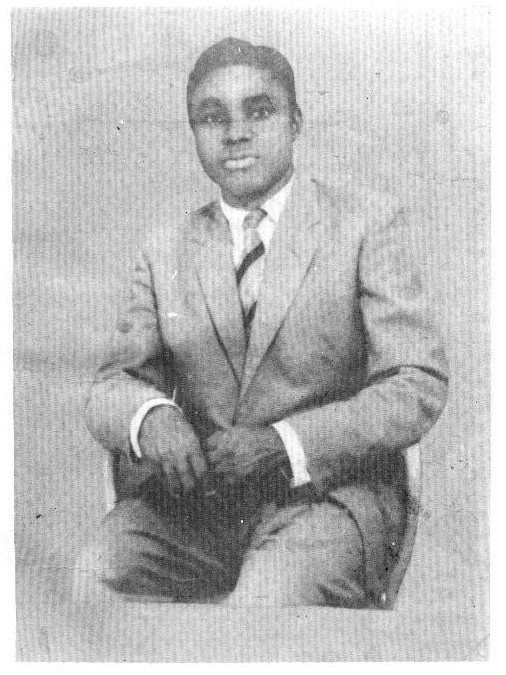
While the UPU branches were engaged in these debates, two Urhobo
young men had been sent for further training in preparation to take
charge of the new college: M.G.
Ejaife went to
Fourah Bay College
Sierra Leone
where he took a
Durham degree. The other was the brilliant E.N. Igho who
went to
Downing
College,
Cambridge
University
in
England, where he read Biology. Ejaife
had earlier studied at the famous St. Andrews College Oyo. At Oyo he
became a contemporary of some of the great names in education in the
Western Region of the 1950s. the late Chief Michael
Adekunle
Ajasin, who became Governor of old Oyo
state and later the famous leader of NADECO was one; another is the
Rev. Alayande, famous Principal of Ibadan
Grammar School and teacher of the great Bola
Ige. Rev.
Alayande now in his 90s is leader of the
Yoruba Elders Forum. Had he lived,
Ejaife would have been 90 at the time of
this lecture. Ejaife became the first Principal of
Urhobo College Effurun, and Igho his
deputy. A comprehensive story of these
great Urhobo teachers is yet to be written. Ejaife was an all round scholar, a
polymath / polyglot – Latin and Greek, English literature,
English language, music, mathematics, history, geography, several
Nigerian languages, the most learned man I have been influenced
by. E.N.
Igho was M. A. (Cantab) and he never allowed too many opportunities pass without him
reminding you of the fact: “I am a
Cambridge master, you
know; your principal is only a bachelor’, he was known to
say. Then there were men like
Ikime, the History Master and Senior Tutor
in charge of admissions, J.G. Ako who was
already a teacher at the Urhobo Collegiate, the predecessor of Urhobo
College Effurun. Daniel
Okumagba was the tough Games and
Maths Master of Urhobo College Effurun who
later became long serving Treasurer of the UPU and prominent
politician of the Shagari era.
Urhobo College Effurun, in the early years was famous, but not for
the number of straight A’s or Grade Ones it produced in the
Senior Cambridge school certificate examinations. It was famous in
sports. But what was remarkable is that UCE graduates went out to
excel in fields which could not have been predicted from their time in
UCE or even from their performance in the school leaving certificate
examinations. Some became well known
scientists, even though the only real science subjects in which we had
any exposure in the early years were Biology and Chemistry, without
laboratories and no Physics at all. Our
biology classes consisted of leisurely strolls with E. N.
Igho through what could be described as
Urhobo College Effurun Botanical Gardens, on the other side of the
Effurun-Sapele Road
facing UCE, the site on which Mid-West Inn was later built, now a
concrete jungle of shops and motor parks. Igho taught what is nowadays called
“integrated biology”, during which we were introduced to
the biodiversity of the Niger Delta Wetlands or what is locally called
Ivwori.
Remarkably, however, the first Urhobo
College Effurun graduate to earn the PhD did it in the field of
genetics from the
University of
Cambridge
in 1964. His name is Matthew Scott-Emuapkor
who became the first professor of genetics in the Department of Botany
at the
University of
Ibadan
in 1978. And, yours sincerely, the first
Urhobo College Effurun product to become full university professor in
any field of study, achieved it in pharmacology at the
University of
Ibadan
in 1977. Again, the first Urhobo College Effurun product to qualify in
Medicine, Prince Sunday Mebitaghan was a
member of my class of 1954. Dr. S. B.
Mebitaghan is a very distinguished public
health specialist based in
Benin. Scott-Emuakpor' was a brilliant scholar
and an all rounder. I know because he was
my classmate and there was usually a baton change between first and
second positions between us – Matthew due to his talents in
science and mathematics; my interests at that time were more in the
arts, Latin and English. Matthew held the
Greyer Cup records in the triple jump (16 feet 7 and half inches
[1953]), and high jump (6ft 4 and half inches [1954]). He also excelled in long jump as well as being a member of Chief
Daniel Okumagba’s tough football
first eleven. It was something of a
surprise to many of us who admire him that Matthew did not pursue any
of these tremendous talents later in UCI or
Cambridge.
Here now, permit me a little immodest indulgence! On my first day in
the “A-Level” Physics class at the Nigerian College of
Arts, Science and Technology Ibadan, in 1956, the Physics master
watched me from a distance while I tried to work a Wheatstone bridge
experiment. I did not know one end of the
contraption from the other, having never set eyes on one before, nor
could I make head or tail of the typed instructions. I began to sweat! Finally, the master came round. Mr. Woodcock was a rough looking Englishman with a reputation from
Umuahia or CKC for tough no nonsense
attitude towards students. I thought he
was going to throw me out! He did not. Instead he glared at me and
warned I could never pass physics at any level in two years without a
previous “O”-Level pass in the subject. From that day on
Nelkon “A Level” Physics became my constant companion. I was going
to show him and I did! I have a certificate to show that I passed GCE
“A-Level” Physics in 1958. What Urhobo College Effurun transmitted to its early products was not
so much dazzling knowledge in specific subjects, but broad education;
a recent Cambridge alumni leaflet humorously defined education as
“what is left after all that was learnt has been
forgotten”. A strong belief in one's
ability to make the most of limited facilities was an important part
of the education. I could, if it was
appropriate to do so, name some great pioneer students of Urhobo
College Effurun, eminent men in Nigerian Society today, who when they
left UCE, no one expected much, but who later attained distinction in
law, politics, administration, the military, academia and in the
literary world.
The robust ability to make do with little could also have been an
attribute of my generation of
Urhobo
College
students, many of whom had come to Effurun from all sorts of primary
schools where some were practically self-taught. I, for example, began my education career in
Owahwa in 1944 in a primary school
appropriately called Ifaka Providence School, after its founder, Mr.
Ifaka of
Ughelli/Evwreni. Ifaka was an entrepreneur, a man who
recognised the educational needs of rural
Urhobo youngsters and started a chain of IP schools in the
Ughelli area. With school fees of three pence per month paid irregularly,
Ifaka did not hire too many teachers. In Owahwa,
Ifaka was virtually the only teacher. He rode into the village once or twice a week on his Raleigh Bicycle
and that was when the classes held. The
rest of the time, we were engaged in the other traditional processes
of education, fishing, wrestling, singing, dancing. I was luckier than most because I had access to informal instruction
from two cousins who were in school at
Otughienvwen. By 1946, I had advanced to primary 3 and had become
Ifaka’s assistant teacher on those
days when he did not show up! This was before I graduated to the
famous Baptist School Oginibo where Urhobo
greats like Gamaliel
Onosode, boardroom guru and 1999 APP
presidential candidate and the late Chief Clarkson
Majomi were also primary school boys. That
was where the Rev. (Dr.) Paul Ebhomielen,
the mentor to whom I owe my advancement in education beyond the
primary school level, was headmaster.
The Case for a Mukoro Mowoe University
The name Mukoro Nowoe is revered
everywhere in Urhoboland not just because he was the first
President-General of the UPU but more importantly for his outstanding
selfless achievements for the Urhobo people. The most outstanding of
these achievements which are there for all to see are in the field of
education. His inspiring role in
establishing Urhobo College Effurun is unparalleled in
Nigeria. But, not many people know that it was Chief Mowoe too who
succeeded, almost single-handedly, in persuading the colonial
government, I am sure against strong opposition from certain quarters,
to move Government College Warri built in 1945 from Warri to
Ughelli in Urhobo heartland. Chief Mukoro Mowoe died on
10 August 1948. In the more than half a century since
then, how have we commemorated him? Let me
draw attention to some examples of the way in which other people have
immortalised their heroes. In my retirement I currently teach pharmacology on contract at the
Obafemi Awolowo
College of Health Sciences of the
Olabisi
Onabanjo University, formerly
Ogun
State
University. I had a choice between that and the
Ladoke Akintola University
at
Ogbomosho
in
Osun
State, the Adekunle
Ajasin University in
Ondo State
or the
Obafemi Awolowo University at Ile-Ife! In his paper
“Mukoro Mowoe and Urhobo Destiny and History”
Peter Ekeh lamented the failure of the Urhobo nation to adequately
commemorate our national hero, and he put forward the following ideas;
I doubt if an occasion has ever arisen to debate them:
i.
Rename
Delta
State
University
after Mukoro Mowoe.
ii.
Establish a Mukoro Mowoe Scholarship Fund
iii.
Build a
Mukoro
Mowoe
International
Airport
in Warri.
The idea of a significant Mowoe commemoration is one with which the
majority of Urhobo will agree; therefore these ideas deserve
consideration by the UPU. Perhaps (i) and (iii) above may draw considerable controversy knowing the
prevailing politics of
Delta
State. On the other hand, the experience from
various scholarship schemes in
Nigeria
is the problem of sustainability in the face of the vanishing value of
endowments. My own addition to the above
list will be for a brand new
Mukoro
Mowoe
University
outside Abraka in the Urhobo
heartland. Dare I say that perhaps the
Chief might be pleased that the idea of a University named after him
is being advocated by a product of Urhobo College Effurun the full
educational significance of which he did not live to see. He might also be pleased to see that his efforts in establishing
Urhobo College Effurun has brought his beloved Urhobos to the stage
where they can contemplate a community university project. As Ekeh put it “we live in an era in which community efforts
have once again become mandatory for groups that wish to overcome the
handicaps imposed by circumstances of poor governance.” There is
no nationality of our population and land size, wealth, endowment in
men and women, that does not boast of least
one university catering to its cultural and educational needs in
Nigeria
today.
There is also a strategic justification. Delta
State
is reputed to be relatively rich, but the state itself is multiethnic
and its coffers cannot be used to satisfy Urhobo cultural aspirations
alone. We are the largest group, but our
experience within
Nigeria
should teach us that we must be particularly sensitive to the feelings
of our neighbours. While we have the crude oil, and
America
and Europe are still buying it,
Delta
State
will remain relatively wealthy. Some of that will inevitably come to
Urhoboland; unless we embark on a major project like a
Mukoro
Mowoe
University, where would all our share of the oil wealth have gone in the end?
Where would our rich men and women have
immortalised their names in Libraries,
Science Blocks, Halls
of Residence? In 50 or 100 years time, the oil might be finished or
when
Europe and
America
may no longer buy crude oil, because it is too dirty; or because they
have discovered cheaper, cleaner forms of energy. Meanwhile,
Urhoboland would have been left physically, culturally and spiritually
in ruin. We could find that we frittered our share of the oil money
away in frivolities. In many parts of the
country, even states with miserable resources are also thinking
strategically and putting down permanent infrastructures while the oil
flows in the Niger Delta. One state, which
shall be nameless, that can hardly raise 10% of its monthly
expenditure form internal revenue is planning a State University; in
the year 2000, only 5 indigenes of that State secured university
entrance scores in the WASC examination. A
Mukoro
Mowoe
University
will not have that problem of suitable entrance material. The Urhobos nation’s contribution to the intellectual life of
Nigeria
is significant and out of proportion to its population. In a cursory count of senior academics in the
University of
Ibadan, Urhobos come next to Yorubas in the
number of full professors. A
Mukoro
Mowoe
University
will be a university that draws on its immediate surroundings for
cultural and intellectual inspiration, with roots in traditional
institutions making contributions to the well being of
Nigeria
and the world at large from the perspective of a unique environment
and cultural experience.
David Okpako
22 Sankore Avenue,
University of
Ibadan
P. O. Box 20334,
UI PO
Oyo Road,
Ibadan.
Nigeria 200 005.
Tel: +234
2 810
7602
+234 0802 350 2618
Email address:
dpc@ibadan.skannet.com
30 August, 2002.