EVOLUTION OF THE URHOBO BIBLE
AND SOME CHRISTIAN LITURGICAL BOOKS
By M.Y. NABOFA
Professor of Religious Studies
University of Ibadan, Nigeria
|
by permission of Professor Michael Y. Nabofa © M.Y. Nabofa, 1997, 2002 |
|
Mrs. Janet Anore Ohwovwiogor, nee Obukohwo-Egide Nabofa. "Oniemo of the Nabofa Family" |
|
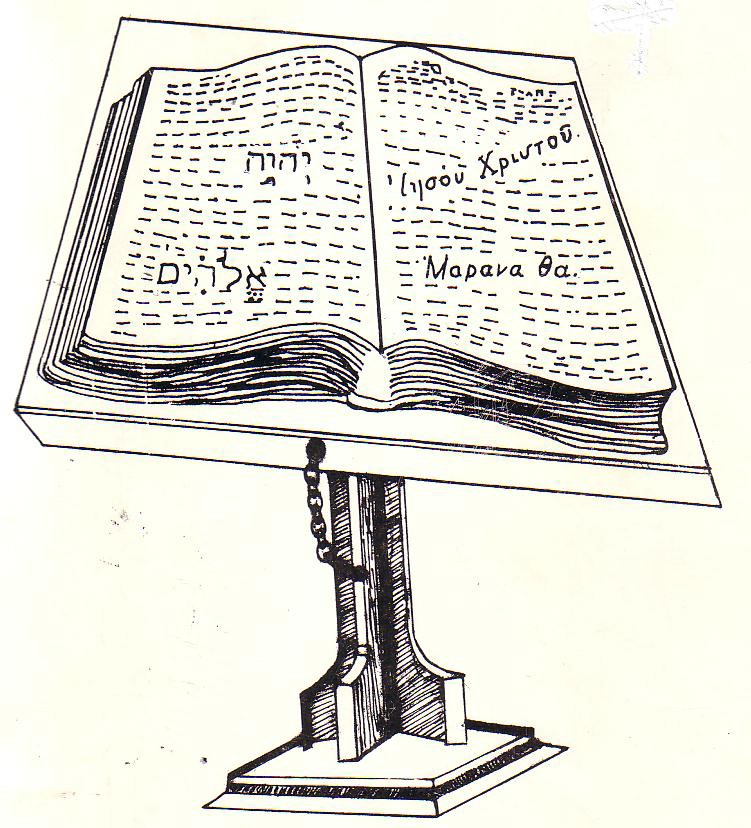
The Holy Bible inside a box with lock and key. In the
olden days the Bible was kept inside a box with lock and
key. Only the Priest was authorised to read it during
service. He locked it after reading it. Today the Bible is
now opened for everybody to read.
|
CONTENTS
|
URHOBO CULTURAL SUBUNITS |
3. The Development of Urhobo Anglican Liturgical Books
4. Some Flaws in the Translation
5. Significance of the Urhobo Bible
6. Postscript
B. Urhobo Traditional Calendar
C. Urhobo Numerals: Ancient & Modern
The major aim of the Bible Society was, therefore, to provide the Bible in a vernacular which every convert understands at an affordable price. This example inspired the formation of many other Bible societies in several other countries in the world where the Gospel has been preached. A concomitant of this move was that the Bible organizations gingered individuals and groups, who showed keen interest to undertake the translation of the holy writ into their vernaculars. It is this same desire that led the Bible societies based in
It is the fact that the earliest well established and organized Christian denomination in Urhoboland was the Church Missionary Society of the Anglican Church of England.[8 The mode of worship and liturgy in the Anglican Church is clearly spelt out in the Church's Common Prayer Book. And every member of the Anglican church is expected to have the book as his companion to enable him worship meaningfully during service by following and responding intelligently to the canticles and versicles."9 But the Anglican Christian's pattern of worship among the early Urhobo Christians was unable to follow strictly the form set out in the Anglican Book of Common Prayer. This was inevitable because the founding fathers of and church leaders were stark illiterates who nevertheless did worship, but whose mode of worship, essentially, took the form of an unorganized Christian prayer meeting.
Thus when the congregation assembled, more often than not, in the Church leader's house or compound, depending on the size of the group the leader recited one or two verses (which most certainly he must have learned from some other Christians) from the Bible. The most commonly thus recited verse was from St. John Chapter 4:24 which says:
God is a spirit; and they that worship him must worship him in spirit
and in truth. (Authorized King James Version)
After that they all knelt down and recited the Lord's Prayer.
According to Enajero Arawore, "no sentences, no exhortation, no
absolution, because there was no priest to read the absolution".10
And while still in the kneeling position they sang or chanted a verse
or two from a Christian hymn. But in some areas of Urhobo, where there
were Isekiri teachers, some of the songs were rendered in either pure
Itsekiri language or in a mixture of Urhobo and Itsekiri. While in
those parts of Urhobo, such as Uwherun and Evwreni, which were closely
related to the Niger Mission, which at various times had headquarters
at Patani, an Ijo speaking town, and at Igbide, an Isoko town, used
Christian songs which had a mixture of Isoko, Urhobo and Ijo
words.11This was due to cross-cultural influence brought about by Christian
evangelism and enterprises. This is not to say that they never used
songs which were purely rendered in Urhobo language. In fact there
were many of them and the following is one of such songs chanted
wholly in Urhobo tongue:
|
|
|
|
Ohwo de bri Jesu
Ko sa mr'urhukpe roye
Jesu Urhukpe wo rue
Wa gba yanrhe re bro ra.
|
If one come to Jesus
He will then see his
(Jesus') light
Jesus, you are light indeed
You then come and let us
All go to Him (Jesus).12
|
the Apostolic Creed which contains the Kernel and the Kerygma of the Christian faith was not said and the Psalms were neither read nor chanted because the people did not know them as Enajero Arawore puts it:
What happened among the early Urhobo Christians could be linked to what took place among the early Corinthian Christians, but that of the Urhobo was more refined and carried out in an orderly manner than that of the Corinthians which St. Paul rebuked when they (the Corinthians) allowed their practice of agape to degenerate into "a kind of riotous picnic."15 But the Urhobo saw the inner meaning of the life of Jesus Christ hence everything was carried out in an orderly manner.
In spite of the above initial seemingly and overt signs of successful Christian enterprise among the early Urhobo Christian converts, the situation still needed to be improved upon before the Christian message could be ingrained in their minds. Such could only be successfully done through a meaningful on textualization of the Good News by means of the Holy Bible being accurately translated into a language that is understood by them.
(iii) The Need for an Urhobo Bible:
One of the major reasons why the early Christian missionary efforts failed in this part of the world was the lack of meaningful explanation of the message of the Gospel to the people, and an absence of the Scriptures in the language that has any meaning to the people. It is a pertinent fact that the spiritual development of every Christian depends largely upon a thorough understanding of the message of the Scriptures which ought to be explained in the language that the people really understand. It was in this vein that various attempts were made to translate the Holy Bible into Urhobo.
We know very little about the first attempts made to translate the
Scriptures into Urhobo. We doubt much whether any attempt was made
during the early missionary era spoken of above. It is a well known
fact that in some parts of
George Pilkinton and Henry Wright Duta, who were christian
missionaries in
The position was different during the pioneering work of Christian evangelization in Urhoboland. As it has often been asserted by many people who have carried out studies of Christian enterprise in Urhoboland, the people evangelized themselves.20 The Church in this area was bounded by illiterates and semi-illiterates who could hardly read the Bible, and according to Enajero Arawoye:
the few who could read were unable to translate the Bible. The first teachers mostly Itsekiri elements had no Bible either. The first teachers read and translated the Bible as they understood it.The English or Yoruba Bible was used as a charm by placing it under the pillow toward off evil spirits and juju (sic). Church leaders and some people who attended Bible classes and Sunday schools were made to memorise few verses of the Bible and these they in turn used for preaching and teaching.21 Enajero Arawoye further observed that as long as the church remained predominantly illiterate no effort was made at translating the Bible into Urhobo language at this early stage of Christianity in Urhoboland. The effect of this was that it was not easy for Christianity to expand rapidly vertically among the Urhobo.
It is through the Scripture that the divine communicates with the devotee. After reading and meditating or reflecting on the passage read, the believer is able to interpret the true import of the message contained in the portion read. This is successfully done through the divine inspiration and guidance of the Holy Spirit and such exercise helps the believer to internalize the message of the Gospel.
Both Christian theologians and Church historians always refer to vertical and horizontal expansion of Christianity when they examine the effects of Christian evangelization among a given people. When they speak of vertical expansion they mean how deeply rooted the faith is in the mid of the people while horizontal expansion refers to the geographical spread of the faith and the numerical strength or population of those who profess to be Christians.
Usually, these scholars opine that the vertical expansion of the faith is the more important of the two because it is more lasting and endures to the end. It is possible, therefore, to argue that the early Portuguese Roman Catholic Missionary enterprise in this area failed because they paid more attention to the horizontal than the vertical expression of Christianity. This is the mistake the early Urhobo Christian evangelists wanted to avoid.
Actually, vertical growth and the development of Christianity among a given people call for an examination of the depth of the development of Christian tenets and practices among such a people. It also looks into how unshaken the faith of the people is and how innately strong is the inward part of the believer, and that is to say, to what extent the people have really internalized the message of the Gospel.
Definitely, it is through constant and meaningful study of the Holy
Bible that the "Word" develops deep roots, strong and unshakeable
faith in the believer. The Holy Bible is the principal means by which
the Christian message grows vertically. Thus, one can appreciate the
need and rational for the Holy writ to be translated into a language
that is best understood by the believer.
|
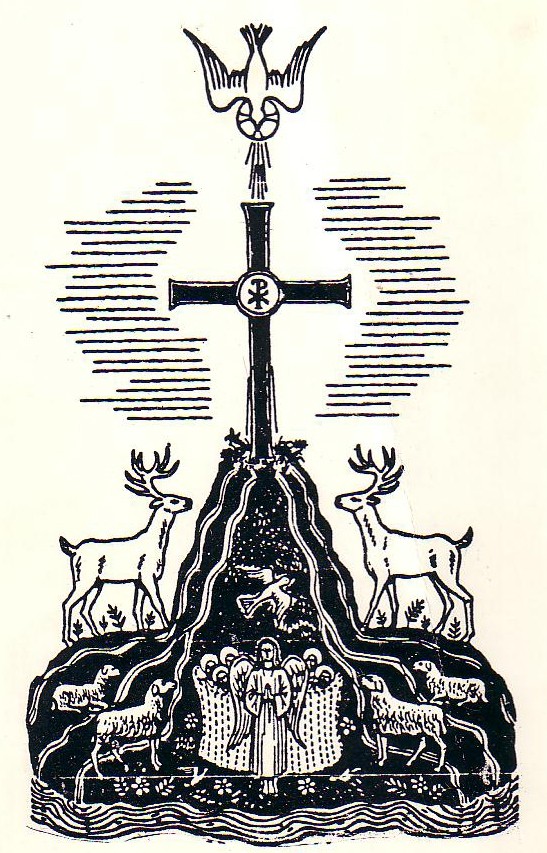
COURTESY OF CARROLL E. WHITEMORE AND WILLIAM DUNCAN Beneath the rock is a symbol of Paradise where the faithful are enjoying their eternal reward guarded by an angel. The Urhobo faithful are among those who are in Paradise. |
We can deduce the following from the letters:
b) the teachers were incapable of giving instruction to the people because the Scriptures had not been translated into the language that they (the teachers) understood:
c) there were on-going Conferences on translation work and Tugwell was anxious to secure the help of the C.M.S. to assist in this work
d) it appears that thee were various versions of the Lord's Prayer in these churches - due largely to a lack of a standardised translation; and that,
e) Tugwell translated a small reading sheet for use of the Churches, content of which is not stated in his letters.
The notes that followed these letters state that two thousand copies of that small sheet should be sold at a penny each; this price allowing a profit on the outlay. Also in the notes, he gave an order that Watts and the Church Catechism should be translated and printed quickly. The Lord's Prayer and the first four of the Ten Commandments should also be translated quickly. In a meeting held at Effurun in that Year (1914), it was resolved that Agbarho dialect, which was almost widely understood, should be used in all translations. Thus, we can see serious efforts made by Tugwell to really ensure that the early Urhobo Christian converts were presented with the message of the Gospel in the language that they understood in order to make for a sound spiritual development. We doubt very much whether copies of these early translations are extant. From the evidence that has so far come to light, Bishop Herbert Tugwell pioneered the translation of the Scriptures into Urhobo by giving the directives that guided the translators without personally engaging himself in the actual translation.
(2) First Urhobo Translation
There was a lull in the spate of Tugwell's pioneered translation
activities when he left the Delta area. Bishop James Johnson, who
later on took charge of other area, insisted that the Church teachers
and Catechists should learn and conduct the Church services in Yoruba,
a language into which the Scriptures have been fully translated.23
Only very few of them were able to meet up with such demand and for
this reason Church services appeared very formless, meaningless, and
uninteresting to those who did not understand the Yoruba language. In
order to save the situation, Mr. Omatsola and a few
other
It was at this juncture that the Urhobo felt that the onus lay on themselves to have the Scriptures translated into their language. The first Urhobo person who made some attempt to translate the Bible into Urhobo was Mr. Thomas Emedo of Orogun. He was a C.M.S. (Anglican) Church agent. In a few years before 1920, he had produced a pamphlet known as Obeke. This was the first Urhobo Primer and it contained some stories from both the Old and the New Testaments which became very popular among early Urhobo Christians. Thomas Emedo also translated some sections of the Book of Common Prayer, and about twenty popular songs. These were the most popular sacred books which the early Urhobo Christians used for their worship that gave them no small inspiration.
In about 1920, one W. A. Tadaferua, who was at Idjerhe, Jesse was
urged by Thomas Emedo to join an Adult Education class. When Mr. W.A.
Tadaferua moved to Warri that very year, he was appointed an
instructor in an Urhobo Bible Class. Together with others, including
Ikimi Waghoregbo of Ephro-Otor, Philip Abi Oghenekaro of Oghwrode in
Udu clan and S. Magi (an Ijo teacher, who was at Ekiugbo, Ughelli),
Mr. W. A. Tadaferua worked in a translation class which was later set
up. According to Erivwo, this translation class also drew
inspirationfrom the Urhobo people in Ikale in Yorubaland.24
In Ikale, one Ofodidun actively organised an Urhobo Christian
congregation under the supervision of Rev. Canon S.C. Philips (later
Bishop Philip), who was then based at Ondo. This group yearned for the
Scriptures to be taught and expounded to them in their own mother
tongue; thence, they actively encourage the group at home involved
with the task of the translation of the Scriptures into Urhobo.
Jointly in the Tadaferua class, they translated St. Mark's Gospel.
They finished this by 1924. This became the major vernacular reader in
the elementary schools of those days.25
The choice to translate St. Mark's Gospel was probably due to its
small size and its being the resume of the life and Ministry of our
Lord, Jesus Christ. It contains almost all the salient issues
discussed in the other Synoptic Gospels. It contains almost all the
salient issues discussed in the other Synoptic Gospels. Hence, in
1936, when Agori Iwe, the first Anglican Bishop of Benin Diocese,
decided to boost the work of translation, in order to avoid
duplication breaking new grounds, he picked up
(3)
The first officially organised indigenous translation efforts.
As the Church grew and developed both vertically and horizontally,
the yearning of the people to have more books in the Bible translated
into Urhobo became greater. In order to satisfy this yearning and to
further enhance the people's spiritual development, Agori Iwe, who was
then the only ordained Priest in the C.M.S. (Anglican) Church in
Urhoboland in 1945, commissioned three Anglican Catechists: Messrs.
J.A. Emofe, Isaac Efedjara and Enajero Arawore to carry on the Urhobo
Bible translation work in earnest.27
Arawore, E. was made the co-ordinator of this project. In order to
enable him to function more effectively in this new assignment, he was
transferred from
To use Enajero Arawore's own words:
All these effors at translation were made by the natives, whose
determination was to make the word of God available to the Christians
in their own language.28
The pioneer translation of the entire New Testament into the Urhobo language had a major flaw; it had no tonal marks. Since the Urhobo language, like most other Nigerian languages, for example, Ibo and Yoruba, tones shave significant meanings, their absence in this first Urhobo New Testament version made reading difficult and impared comprehension since the absence of the tonal marks in some words occasioned wrong interpretations of the words. In spite of this flaw, the Urhobo Christians were greatly encouraged by this spectacular achievement and the enthusiasm with which the people received the translation encouraged the translators to take up the more tedious work of the translation of the Old Testament, in addition to reviewing that of the New Testament.
Translation of the Old Testament
(1) Formation of the Joint Consultative Urhobo Translation Committee.
Venerable Enajero Arawore, the Chief Co-ordinator of this Christian enterprise, was not satisfied with the stage reached so far in the translation work. The order of worship in the (C.M.S.) Anglican Church requires that out of the two lessons to be read during every worship, the first one should be taken from the Old Testament. Not only that, at least one ot eh Psalms should also either be read or chanted. As the Old Testament had not been translated, the practice then was for the reader to translate straight from the English text. This was not very smooth and satisfactory. Apart from that, there was no uniformity in the whole process of direct translation.
In order to overcome all these problems, in 1959, Venerable Enajero Arawore who was stationed at Uwherun at that time, convened a meeting of all the clergymen of the various Christian denominations in Urhoboland to plan for the translation of the Old Testament. The first and subsequent meetings of these people were held at Ughelli, which was then the seat of Venerable Agori Iwe, who was at that time the Archdeacon of Warri Archdeaconry in the Niger Delta Diocese, Anglican Communion.
A joint consultative translation committee of all the Christian denominations in Urhoboland was thus founded. This joint effort was to guard against what happened between Agori Iwe and Jovi Aganbi in 1936 and in order to expedite the translation enterprise through team effort. Another reason for the Urhobo Joint Consultative Translation Committee, according to Enajero Arawore, was "to give the translation a national fervour and one acceptable to all (the Christian) denominations29 in Urhoboland.
The Roman Catholic Church was not, inadvertently, represented during the inaugural meeting, but her representatives attended the subsequent ones. It was resolved in that meeting that all the ordained Urhobo-speaking Ministers of all the Christian denominations should be members of the Joint Consultative Translation Committee. This also implied that all the Ministers that were to be ordained later were automatically to join the committee. In addition it was resolved that the Old Testament translation work should start immediately.
The following were the pioneer members of the Urhobo Joint
Consultative Translation Committee:
Anglican Church
(1) Rev. J.A.O. Emoefe
(2) Rev. Unurhieri
(3) Rev. J. O. Dafiewhanre
(4) Rev. J. Eterhere
(5) Rev. Enajero Arawore
(6) Rev. Mark Forae
(7) Rev. Otubu
(9) Rev. W. Tadaferua, and
(10) Rev. P. Akposibruke
(1) Rev. J. Okirhienyefa
(2) Mr. Ibuje
(1) Rev. P. E. Onosode
(2) Rev. V. Eghaghe
(3) Rev. Okerentie
(4) Rev. Orikiri
(5) Rev. F. Awetefe
(6) Rev. Otojareri
(7) Rev. P. Ofuoku
(8) Rev. Ariemuduigho
(9) Rev. Agbaluya
(10) Rev. J. E. Ukueku
Roman Catholic Church
(1) Rev. Father Vincent Obudu
(2) Rev. Father Paul Okudaje
Salvation Army
(1) Captain Uvwo
The fol)lowing were appointed as the Executive Officers of the
Committee charged with the onus of seeing to its day to day
affairs:
(1) Patron: Rt. Rev. Agori Iwe
(2)
Chairman: Rev. P.E. Onosode (a post he held until his death in
1976).
(3) Deputy Chairman: Ven. J.A.O. Emoefe
(4) Treasurer: Rt. Rev. Agori Iwe
(5) Secretary and Co-ordinator: Ven Enajero Arawore
Someone who could perform secretarial duties was appointed as a Clerk to handle all duties emanating from the translation committee. His main duties were to handle correspondences, to type would all the translated scripts, mimeograph and arrange them in an orderly manner. He was place on an initial salary of ten pounds per month.
Why these People were Chosen
These people were chosen for this holy assignment because of their
expertise in Urhobo language and culture, and competence in English
and Biblical languages: Greek and Hebrew. For example, Venerable
Enajero Arawore, who was the coordinator was trained at the Trinity
College, Umuahia in the mid-1950's and was priested in 1957, had
records of excellent performance in Biblical Hebrew and Greek
languages, while he was studying there. All the other clergies had
working knowledge of those languages too. This informed their being
drafted into human qualities identified in them, which aided their
selection, judging from the efficient manner in which they handled the
work, it is hard to believe that they worked without the divine
guidance of the Holy Spirit, for as the Bible is believed to have been
written under manner translated into Urhobo under the inspiration and
guidance of the Holy Spirit.
(1) Translation Procedures
During the translation proper, a number of books were assigned to
each translator. The arrangement was that a completed book was to be
sent to the Venerable Enajero Arawore, the Co-ordinator, for scrutiny
and correction after which it was to be sent to the typist for typing
and mimeographing. The mimeographed copies were to be sent to some
selected laymen, who after reading through them were to make their
comments and corrections where necessary and return them to the
co-ordinator, who would in turn read through them again and pass the
draft copies to the typist to effect the necessary corrections on the
semi-final draft copies. The co-ordinator closely supervised the
typing of these fair copies to ensure that no mistakes were made. At
the end, these copies were sent to the translation department of the
British and Foreign Bible Society in
The meeting of the translation committee was rotated among the
following church centres:
The business of the Translation Committee during each meeting was not
limited to translation work; but the questions referred to the
committee by the Bible Consultants in
The following are some such foreign words the translators found difficult to render into the Urhobo language.
Incense: It was retained but spelt inces
Door-post: edivu. This is a word derived from Uwherun and Ughievwen dialects
Otentan literarily means smooth and devoid of any filth. It could also mean empty and in this context, it means empty of dirt or filthy. As used in the Urhobo, it means sparkling clean.
White: Ofuafon.Ofuafon is the common Urhobo word for "white" and "clean but in order to differentiate clean from white in the Urhobo Bible, the translators had to use Otantan for clean which is derived from Ughievwe dialect for it.
How to name and correctly translate the four cardinal points into Urhobo also posed a serious problem. However, they came out with the following translations:
East: Obaro-onre which literally means the front or in front of the sun. The expression Ovatsa-ro onre, meaning where the sun rises from, could have been a better and meaningful translation as it conveys a better geographical location of the east, as where the sun rises from. It should be noted that in Urhobo thinking and understanding, if one stands and faces where the rays of the sun are coming from, either from the East or the West, he is described as standing and facing the sun, Obaro-onre which is the ovacha-oren. Hence, the suggestion of Ovacharo-onre as being the more appropriate translation or rendering of East in Urhobo language. West is translated Obuko-onre meaning the back of the sun. Again, this is not too correct arendering because, geographically, the sun has neither back nor front. North is translated Obohwere-onre, which means the left hand-side of the sun. south is translated Oborhe-onre, which means the right handside of the sun.
To those of us on the earth planet, we know that the position of the
sun is stationary or stagnant. Its direction to us in the morning is
not the same at
One can see that the translation and interpretations given to the four cardinal points are anthropomorphic because geographically, the sun has neither right nor left. The problems faced by the translators in finding appropriate words and expressions for their work probably arose as a result of their tendency to restrict themselves to the recommended and accepted Agharho dialect as the medium of translation. If they had probed further than they did into other Urhobo dialects, they would have found more suitable words and expressions to solve most of their problems. Nevertheless, it should be appreciated that in reading carefully through the Urhobo Bible, one would discover that it is not only Agbarho dialect, but nearly every Urhobo dialect had considerable input in the translation the Bible.
Meanwhile, as the translation progressed, it was decided that something should be done to wet the reading appetite of those who were yearning to read the Bible in Urhobo language, and secondly, to encourage Urhobo Christians to develop more interest in reading the Holy Scriptures in their own mother-tongue. What they did to satisfy the above objectives was to publish The Book of Genesis, which was among the first books whose translations were completed. This was done in 1963 and not quite long after that the complete Book of Psalms was published.
As we had earlier hinted, when each book had been satisfactorily
translated, it was sent to the United Bible Society in
The translation Committee met for several days in the house of Chief J. E. Ukueku at Eku to proofread it. The committee cop-opted Venerable Professor S.U. Erivwo, an Anglican Priest, and Rev. Father (Dr.) Erhuen, a Roman Catholic Mission Priest, in the final examination of the books. As we had earlier mentioned, the Chief translation consultants, who were Dr. P. Stine; Dr. E.A. Dahunsi and Dr. Eugene W. Bunkowske, did this under the auspices of the United Bible Societies.
The translation which was started in 1951, including the Old
Testament and the revision of the New Testament, ended in 1972, a
period of thirteen years. In fact, Dr. Eugene W. Bunkowske confessed
to both G.G. Darah, and my humble self, in1976, that this was the
longest translation of the Bible into any language he had ever handled
so far. It was sent to the press in 1972, and it did not come out
until 1977. That is, the whole process lasted about eighteen years. It
was a great pleasure to the entire Urhobo people when the Bible was
launched on
From the previous history of how the Bible was translated into other languages, we learn that it takes shorter period to translate the New Testament than to translate the Old Testament. For example, "Martin Luther translated the whole of the New Testament into German in only eleven weeks, but the Old Testament took him twelve long year."30 So that of the Urhobo was not an exception. Such delay may be due to both the large volume of that section of the Bible and the technicalities involved in its translation. Thirdly, Christian translators tend to relax their efforts in translation work once the New Testament, which contains the main message of Christianity, has been done completed.
Roles of the British and Foreign Bible Society (B.F.B.S.) and
United Bible Societies (U.B.S.)
The B.F.B.S. and U.B.S. played significant roles in the successful translation and launching of the complete Urhobo Bible Consultative Translation Committee, the major decisions taken and how they planned to carry out the translation work were conveyed to the B.F.B.S. which are based in London.
According to Venerable Enajero Arawore, the respond from the B.F.B.S.
was very favourable.31
The reply was also accompanied with a list of questions. The Joint
Consultative Translation Committee quickly responded to all the
questions and issues raised in the reply from the B.F.B.S. these
London based Bible Societies saw the great prospects in the work of
the Urhobo Bible Translation Committee and made recommendations to the
United Bible Societies (U.B.S.) thee and then undertook to pay the
salary of the typist, to provide such facilities as may be needed from
time to time, and assigned a specialist consultant to supervise the
work.32
We cannot say exactly now how much the U.B.S. spent on this venture. The U.B.S. actually sent about N400.00 annually towards the typist's salary. And this it did promptly until the whole translation was completed. The U.B.S. spent some other huge amount of money towards this translation enterprises. In fact, the exact amount which these Bible Societies expended towards the completion of the Urhobo Bible, we are unable to say and quantify now.
In order for the translation Committee to be well guided, the Bible
Society of London arranged for some members of the Urhobo Bible
Translation at this instance, Ven Enajero Arawore, who was the
Secretary and Co-ordinator of the translation enterprise, and Rev. P.
Ofuoku of the Baptist Church, were invited by the United Bible
Societies of London to attend a one month workshop on Bible
translation in a place called Ali-Baba, which is midway between Duala
and Yaounde in Cameroun. They found this course very rewarding. In the
words of Enajero Arawore, "We returned with new ideas and techniques
in Bible translation."33
The United Bible societies evidently demonstrated keen interest in
this work. It became deeply involved in it and did everything possible
to see that the job was perfectly done. In order to achieve this it
assigned, Urhobo Bible Translators the following Bible Consultative
Translation Committee:
(1)
Dr. Williams Reyburn who was based in
(2)
Dr. P. Stine, who was based in
(3)
Dr. and Mrs. Eugene W. Bunkowske, who were also based
in
These specialists met with them periodically to discuss intricate translation problems. They helped in no small measure in straightening the translation of difficult words and phrases. These experts also conveyed to the U.B.S. the problems and requirements of the Urhobo Bible translators. In order to hasten the production of the translated texts, the U.B.S. donated to them a Gestetner Duplicating Machine for the easy mimeographing of the texts typed into stencils.
The translation consultant based in
This was a very critical examination of our translation work, and
their corrections and comments helped to a great measure the success
we have so far achieved in the translation work of the Urhobo
Bible.34
It was when the translation consultant in
The Development of Urhobo Anglican Liturgical Books
A close observation of Christian enterprise in Urhoboland reveals
that the production of Urhobo liturgical books in the Anglican Church
took place almost simultaneously. As we had earlier mentioned above, a
few years before 1920, Mr. Thomas Emedo, a native of Orogun who was an
Anglican Church teacher, produced a Christian literature called Obeke
and an Urhobo Book of Common Prayer, following closely the Anglican
Book of Common Prayer of 1662. This liturgical book contained the
orders of morning and evening worships and twenty (20) hyms translated
from the Hymnal Companion. This liturgical book did not have psalms,
no orders of Holy Communion, Baptism, Confirmation, burial and
marriage services. However, according to Enajero Arawore, "This was
the beginning of the evolution of worship in Urhobo Anglican
Churches."35
In this aspect of Christian enterprise, Mr. Thomas Emedo could be regarded as the son of encouragement. Following his footstep, but at a higher level, at this time, in 1940, Rev. Agori Iwe, who later became Bishop Agori Iwe, the first Urhobo ordained Christian Priest, produced the second Urhobo Book of Common Prayer. This publication contained a number of Psalms and seventy-two Christian Hymns, most of which were translated from the Hymnal Companion. Some other essential services were also included in this Agori Iwe's translation, but the Orders of Ordination and Consecration Services, and the Anglican 39 Articles of Faith were excluded from this version of the Urhobo Book of Common Prayer. This Book of Common Prayer translated by Agori Iwe remains the officially accepted liturgical Book of Common Prayer among the members of the Urhobo Anglican Church till today.
As membership of the Church increased and many more acts of worship were included, the need to have more Christian hymns increased. In order to minister to the people's need in this aspect, Enajero Arawore assisted by David Eferakeya and Papa Oghenekaro translated more Christian hymns into Urhobo. These were added to Agori Iwe's collection and the number increased from seventy-two to two hundred and fifty-two in 1958.
In its eleventh annual general meeting of 1958, the Christian Council of Nigeria (C.C.N.) had lengthy discussion on how to enrich Christian life and worship. At the end of that discussion, the following resolution was passed:
The Council asks its region committees to arrange for the discriminatory examination of local customs and beliefs with the view to the enrichment of Christian life and worship, and to appoint a sub-committee to collect and examine indigenous musical compositions and the words to which they are set; to assess their worth for use in worship. It is also urged that Christian hymn-writers and composers should be given every encouragement to produce new original hymns for worship and it was suggested that a conference of all those interested and qualified for this work should be called together by the C.C.N. to bring this need more forcibly before gifted members of the Church.36
Venerable Enajero Arawore must have tapped the spirit and kernel of the above ideas of the members of the C.C.N. during one of his silent moments and became enthused with the development of Urhobo Christian literature.
The zeal to produce Christian literature in Urhobo language was very
great in the mind of Venerable Enajero Arawore, because he felt that
that is one of the ways the Word and the Message can be internalized
by the Christian. He also felt that the more varied the sources from
which these Christian materials were drawn, the better and wider the
vision of the Urhobo Christian would be.
The above informed Venerable Enajero Arawore's action in taking a
more critical look at the Urhobo liturgical books; and in 1978, he,
working single handedly, increased the number of hymns from two
hundred and fifty-two to three hundred and forty-two. Venerable
Enajero Arawore knew that variety is the spice of life: he therefore
made gainful use of as many hymns as possible available from the
different sources that were at his disposal which included the
collection of Christian hymns in Urhobo that could be found in the
Hymnal Companion, Sacred Songs and Solos and B.B.C. Hymn Books. The
size and the volume of the collection made it imperative that the
hymns should be separated from the Book of Common Prayer. Thus, in
April 1981, a separate Urhobo Christian Hymn Book was developed and
printed by the Caxton Press, West Africa Limited, Ibadan.
(b) The Roman Catholic Experience
As we had once hinted, the Roman Catholic earlier Christian
Missionary enterprise in Warri and as far as to other parts of
Urhoboland did not yield much fruits. That was the Portuguese attempt
which had been described as "futile, and spasmodic" an attempt which
became indistinguishable from the nefarious trafficking in "living
tools" that was to last for over 300 years.37
It was in 1912, that Revd. Father Louis Cavagnera rode on a bicycle
from Ukwuani district, traversing the Urhobo country to Warri. This
was a reconnaissance to determine what prospects of missionary
activities existed at Warri. He found a few Roman Catholic Clerks in
the employ of the African Trading Company. After a few other visits he
came finally to Warri in 1913 to settle at the African Trading
Company's house which was also to serve as a Church House. He soon
made the acquaintance of some pupils at the
The early form of worship in the Roman Catholic Church was mostly in English and Latin. Neither of these tongues was understood by most of the worshippers. Most part of the Mass was said in Latin and with the possible exception of the priests and very few literate members, most Urhobo Roman Catholic members did not understand what was being said in the liturgy.
There were very few Roman Catholic Priests, Catechists, and teachers who were knowledgeable in their ways of worship. Consequently their service centres were concentrated in the major towns and villages such as Warri, Ughelli, Evwreni, Sapele, Okurekpo (Agbon) Okpara in land and Effurun.
One of the Roman Catholic strageties was to avoid the towns and villages where the Anglican had strongholds. This could be one of the explanations for the stronghold that the Rooman Catholic had in Oto-Ogor, Evwreni, Ewu, and Okpara-inland where the Anglican had no much grip. Places like Uwherun, Udu, Ughievwe and Uduophori, just to mention but few, which were earlier evangelised by the Anglican Church Missionaries, even up till today, do not have vibrant Roman Catholic Churches as those of the former.
Nevertheless, the Catholics made several attempts to establish church posts in nearly every Urhobo town or village. This they did by establishing schools and pupils of these schools automatically became their first converts. The classrooms were their first places of worship.
The Rev. Father was looked upon as a very sacred person. In fact, his mode of dress and how he comported himself coupled with the mystery stories which the faithful catholics peddled around him, made him to be looked upon with great awe. He surrounded himself with the aura of mystery which surrounds a traditional Urhobo priest in charge of any one of their major community divinities.
Whenever the Rev. Father visited a town or village to conduct a Mass he and the faithfuls processed through the town. While in such procession the Rev. Father with his accolytes took the lead. He sprinkled his holy water all over the place and on those nearby.
Such exercise normally attracted many spectators, especially the young ones, and most non-Catholics avoided being touched by the Rev. Father's Holy Water. Many thought that whoever was touched by the holy water would be charmed and must automatically become a member of the Roman Catholic Church. But should he/she refuse to be converted, she/she stood the risk of being severely tormented by the God of the Ifada (the Rev. Father).
The Latin language used during the Mass, like the classical Urhobo
diviner's (obuepha's) weird and sacred esoteric language,39
generated a great deal of aura of mystery around the Roman Catholic
liturgy. After a while the whole liturgy became mechanical and
meaningless to most of the faithful because they could hardly
understand the meaning of the
On
The above more received the warm embrace and blessings of His Lordship, Most Rev. Dr. Edmund Fitzgibbon, the Apostolic Administrator to Warri Diocese.
The first product of this group was a liturgical book which is designed primarily to enable the Urhobo Faithfuls know and understand the meaning of the songs and it included important Universal prayers. They arranged the contents carefully in accordance with the seasons.
The manuscript prepared by this group was passed on to His Lordship, the Most Rev. Father Edmund Fitzgibbon, who ratified it before its use in the church was allowed.
At the end of the sales of the first edition of this Urhobo Catholic liturgical book, a committee was set up to revise and correct some of the minor errors noticed in it. The following were the members of this committee:
1. Mr. Simon Ighofose: Chairman
2. Mr. Isaac Oguori-Okodaso: Secretary
3. Mr. Michael Eruemuose: Member
4. Mr. Miller Agbuna: Member
The other obligation assigned to this committee was to correct and include other Urhobo Hymns which were in use but were not included in the first edition.
In order to accomplish this task the committee called for Urhobo Catholic Hymns that were not included in the first edition and all the available English Hymns. They carried out the work in two phases: First they revised and edited the first edition. Then they handled those hymns that were later collected.
The committee found the work of the first edition quite easy because before they started on it Mr. Kevin Awatighre had thoroughly revised, edited and arranged its contents in seasons. That is, the main sections of the book dealing with the Mass and Hymns 1 - 121 as they stand today were revised by him.
According to the members of the revision committee the 2nd Edition of the Roman Catholic Liturgical Book currently in use in all the Catholic Church in Urhobo language was published in May 1993 by Emmanuel Urhobo Catholic Joint Choir.
The different roles played by the following individuals in the
production of the liturgical book merit mention, even if
briefly.
1.
Mr. P. I. Ogriya - President of the Emmanuel Urhobo Catholic Joint
Choir.
2.
His Lordship the Most Rev. Dr. Edmund Fitzgibbon showed great interest
and concern in the Second Edition.
3.
Prince S. P. Ukpebitere and his officers, who initiated its
printing4.
4.
Rev. Father Paul Ighaguolor, the spiritual Director of the Choir and
his members.
5. Rev. Father Peter Ovadje.
6.
Catechist
7. Paul I. Ogriya
Lawrence Owena and Paul I. Ogriya the last mentioned two names made the checking arrangements and the necessary corrections on the doctrinal liturgical errors.
The ministry of the Emmanuel Urhobo Catholic Joint Choir has thus made worship to the Urhobo Faithfuls more interesting and meaningful. The Word has thus incarnated and now dwells among the people.
The following Hymns were used in the process Wesminister Hymnal (W.H.). my Daily Prayer Books (DP), Ancient and Modern (.M.), Broadman Hymnal Companion (H.C.) and Sacred Songs and Solos (S.S.S.). All other Hymns not found in these Hymn Books were treated as self-composed and corrected to bring meaning to them.
According to the members of the Revision Committee:
The work we did (as Kevin did) includes:
(1)
Removal of Hymns already in part one of the Hymn Book e.g. 2, 32, 47,
104, are the same as 130, 143, 184 and 159 respectively.
(2)
Adopting 'C' and 'Ejir' Oghene' for "ch" and "Alleluya"
respectively.
(3)
Grouping Songs of "
(4)
Indicating where the Hymns are found in the English Hymn Books for
easy reference.
(5)
Including common Urhobo prayers like Morning and Evening prayers
(short and long), Communion prayers etc.
(6) Changing the word "Masi" to Izobo Ofuafo.
(7)
Re-arranging the Hymns in Seasons according to the Catholic Liturgical
yea.
(8)
Including other Hymns not supplied to bring the number ofHymns to 322.
(10))Adding the remaining 10 verses of the Station of the Cross Song.40
The members of the revision committee concluded thus:
It is our earnest wish, therefore, that this Book should find a place
in every Catholic Community and pray for God's blessings through the
use of the Hymns.41
(a) Gold: Oro which is correct.
(b) Frankincense: Adjidja - which is a spice put in a pomade to give it a nice aroma.
(c) Myrrh: Ugboduma - This is a sweet-smelling creeping herb which is found in and around many Urhobo traditional shrines and sacred places. It is acknowledged as a sacred plant and people plant it, not only to attract benevolent spirits, but also, to ward off evil forces such as witches and wizards.
As these gifts are not found in Urhobo culture, the translators probably had to use these two names as their Urhobo equivalents. Critical adherents of Urhobo religion often say that, after all, Jesus Christ was given one of their most revered plants and God did not feel offended against it. So, they and the Christian could be said to be working towards the same goal. In Urhobo cultic practices, Ugboduma is used to purify, sanctify and tile a shrine or sacred place. Jesus was already holy so he neither needed to be purified nor sanctified. Those who translated the New Testament into Isoko, which is a sister Urhobo language, retained frankincense and myrrh, because, like the Urhobo, they do not have such items in their culture. These strange words being retained have done no harm to the Isoko Bible; but the improvisation of Urhobo words by the Urhobo translators has tended to convey wrong and misleading interpretations of those two words, in their traditional relation to the pristine purity and divine nature of Jesus Christ.
The other misrending we have noticed is in Luke Chapter 17 verse 31. In the Authorizes King James Version it reads thus:
Behold, the
This is translated as follows in Urhobo:
Kidi nighe, Uvie re Oghene na o he or=hri re ovwan.
Actually this expression means behold the
The Greek plan text Entos which is translated Ohri (in the midst of) contains a major translation error. In the kingdom Interlinear Translation of the Greek Scriptures it reads.
Therefore the Urhobo translation would tend to show Jesus quite out
of context. Thus the incorrect translation thereby destroys the whole
picture of the
It should, however, be realized that the Bible grew out of a culture which is totally different from that of Urhobo. One should then not wonder why the translators found it very difficult to find Urhobo equivalents for most of the ideas, symbols and things in their task to translate the Holy Bible into the Urhobo language. It is near impossible to translate ideas from one culture to another without flaws.
We must appreciate the fact that most of the flaws in the Urhobo
Bible are of technical nature arising from printing and cultural
differences. They do not in any way affect or detract from the
spiritual message, historical facts, Christian code of pious conduct
including spirituality and ethical lessons contained in the version of
the Urhobo Bible.
The difficulties encountered in trying to grasp the meaning of a passage written in a foreign language before drawing out the spiritual and moral inferences and messages it carries are eliminated. The people have now begun to realise that the Word has incarnated in the flesh and dwells among them. This has enhanced the quality of Christianity worship and aided the vertical expansion of Christianity among the Urhobo speaking people. The complete Urhobo Bible has saved the time and energy of all those who lead in group or congregational worship. Formally, they spent much time in studying and trying various methods to translate a set passage to be read during services. The time which was meant to meditate over a passage before worship was often spent on translation exercises; the result was that the addresses of these people to the congregation had no real depth. By now, they find it easy to read and brood over the passage and its message in a less tense atmosphere.
Naturally the day the complete Urhobo Bible was launched marked
another mile-stone in the history of Christian enterprise in
Urhoboland. The launchingceremonies presided
over by Mr. Justice Ovie-Whisky, a former Chief Judge of the then
Bendel state, took place at St. Matthias' Anglican Church, Eku. One of
the main reasons for the choice of that venue for the launching was
because that place was the first headquarters of the Church in
Urhoboland. In other words, the events that took place in that place
on that day could be regarded as a replay of the early history of
Christian evangelism in Urhoboland. The enthusiasm with which the
Urhobo Christians attended the launching of the complete Urhobo Bible
at Eku on
On the whole, the Joint Consultative Urhobo Bible Translation
Committee has succeeded greatly in producing an Urhobo Bible which to
some extent is both accurate and clear. One other beneficial result of
the Urhobo Bible is the unifying effect it has on the Urhobo language,
the impetus it lends to a wider use of Agbarho dialect. Using Agbarho
dialect as a base, the translators have fashioned out a means to unify
the 22 different dialects spoken in Urhoboland. This process to foster
the use of one universal Urhobo literary language has been going on
since 1914 and it is now being furthered by the formation of the
Urhobo Language Committee. One hopes that such unity in language would
eventually lead to the much needed socio-political and cultural unity
which the Urhobo are now craving for. Members of the Urhobo Language
Committee working hand in hand with the translators of the Urhobo
Bible, with particular reference to the Venerable Enajero Arawore may
be able to bequeath to the Urhobo people what Martin Luther did for
the Germans; because "Luther through using the Gereinsprache of the
peasants, mystics and scholars was able to produce a unified German
understood by Upper and Lower Germans."42
In fact, to some extent, the members of the Joint Consultative Urhobo Bible Translation Committee have made such contribution to unite and standardize Urhobo language.
One significant factor in the production of the Urhobo Bible is the
joint in-put of all the Christian denominations in Urhoboland. That
was the first place in
6
POSTSCRIPT
Recommendations for Future Improvement
Howard S. Olson has opined that:
"all languages are constantly changing, and so the unchanging
(Logos) Word needs to be restated. Thus, it is indispensable, if the
original message of the scripture is to be retained, that the form
of its language be altered from time to time to conform to new modes
of expression."43
The above idea must have informed the action of Martin Luther and many Bible Societies. Luther, immediately after the publication of his Bible set about correcting and improving it and we are told that the German Bible Society is, even today still up-dating the Luther Bible.44 Such is, also being done by many other Bible Societies in the world, and the Revised Standard Version, the New English Bible and the Jerusalem Bible, just to mention a few, are products of the dynamics to explain the Unchanging Word to a changing world.
The United Bible Societies are busy up-dating the message of the Bible. That of the Urhobo should not be left behind, because they are a part of the changing world of an Unchanging God.
The other suggestion that one would like to put forward when the present edition of the Urhobo Bible would be revised, is for those who would be assigned that duty to secure the services of Urhobo-speaking people who are specialists in the areas of Zoology, Botany, Medicine, Philosophy, Poetry, Psychology, Folklore, Oral Literature and linguistics. The Zoologist and Botanists will help in supplying appropriate or near Urhobo equivalents of some of the plants and animals mentioned in the Bible.
While the Physicians would give more accurate interpretations to the medical terms, the Poets, Philosophers, the Folklorists and those in Oral Literature, will put the ideas in the Psalms, Prophets, and the Wisdom Literature, into proper and more pleasant poetic perspectives and renderings. The specialists in Linguistics will definitely act as the guiding-light to the translators. Such team of experts, be they all Christians or not, will definitely come out with a more accurate translation of the Urhobo version of the Bible.
In order to improve upon the next version of the Urhobo Bible, one
would like to suggest that the few insignificant errors in the present
translation, some of which we have highlighted above (in Section IV of
this monographs) should be corrected. Attractive illustrations and
maps of the
It is also being suggested that the Urhobo version of the twelve
officially recognised books of the Apocrypha be included in the next
edition of the Urhobo Bible.45
As we are all aware, the apocrypha are books which Christian usage and
opinion about their status were somewhat ambiguous until the 16th
century, when twelve of them were included in the Canon of the Roman
Catholic Church, but the Council of Trent, but the Protestants (Luther
and the Anglican Church in the Thirty-Nine Articles) admitted them
only for private edification.46
Many Urhobo Roman Catholic faithfuls will definitely find these books useful. Their absence from the Urhobo Bible has made many Urhobo Roman Catholics feel that the Holy Bible is not yet complete in Urhobo language. Some members of the Protestant Churches may find them useful in private edification. Not only that, there are occasions in which passages from the Wisdom of Solomon, which is one of the twelve recognised books of the Apocrypha, have, even, been used by some members of Church the Anglican during public worship, such as funeral services.
It thus means that the absence of these books from the Urhobo version
of the Holy Bible has made some Urhobo Christians, especially the
roman Catholics, feel that they are yet to have the complete Holy
Bible in Urhobo Language.
HISTORICAL BACKGROUND
During one of three expeditions - 1841, 1854 and 1857 - Samuel Ajayi Crwother sought to introduce the christian faith to Okwegbe people who belong to the Urhobo ethnic group. He made an attempt to live on the Western Bank of the River Niger. We are told in the christian oral tradition of the Urhobo that the Okwabe people rejected Crowther and his message which he claimed to have brought from God the Okwagbe could not conceive how a man could claim to good news from OGHENE (Urhobo world for God) who is often identified with the sky. They were more interacted in trade than on that type of good news which seemed to be a fairy tale.
The above quotation from an authoritative book on a History of Christianity in Nigeria - The Urhobo, Isoko and Itsekiri, by Samuel U. Erivwo, Daystar press, Ibadan, 1979 at page 4 tells a graphic story of how christianity attempted to have an effective foot hold on the soil of Okwagbe, in present day Ukpedi District of Ughievwen Archdeaconry that is now being proposed as part of the new Ughelli Anglican Diocese. As the scripture says: "The stone which the builders rejected is become the head of the corner. This was the Lord's doing and it is marvelous in our eyes".
Available records show that the planting of Christianity in Urhobo
was essentially the work of Bishop James Johnson of
the
There were the men, whose activities led to the establishment and
nurturing of the christian faith of the Anglican church in Urhoboland.
In those days, this involved travelling long distances on foot, by
canoe or by bicycle, sacrifices which they made joyfully in
propagating the gospel of Christ in our land. We are happy to observe
that in our Lord's vineyard, "the labours of our heroes past have not
been in vain", as could be seen from the tremendous growth of the
Anglican Church in the entire Urhoboland in general and in the
proposed Ughelli Diocese in particular. We cannot also but mention,
the colosal efforts of the late Chief Evangelist, Cornelius Adam
Igbudu of Araya in Isokoland. The evangelical Movement of the Adam's
Anglican Preaching Society, (A.A.P.S.) which he founded bestrode the
Anglican Communion in the
A brief look at the steady growth of the Anglican Diocese will be
instructive at this point. When Warri Diocese was inaugurated
on
Meanwhile, as part of the phenomenal growth of the church in the area covered by the proposed Ughelli Diocese, All Saints' Church, DSC Township, Orhuwhorun which was part of Ughievwen District, was constituted into an extra-Parochial Chapelry by the Late Rt. Rev. J. O. Dafiewhare in August, 1991 and placed directly under the Bishop. Between 1995-1996, two (2) additional District Church Councils, All Saints' Ughelli and Ogor were created in Ughelli Archdeaconry to bring the number of Districts to six (6). It is to be observed that the creation of these new districts and Archdeaconries was in compliance with the strict criteria and standards in the Anglican tradition.
Thus, having transformed itself from one Archdeaconry of four (4) district church councils in 1980 to three (3) Archdeaconries of sixteen (16) district church councils by August 1996, the area of the proposed Ughelli Diocese (Anglican Communion) has demonstrated its capacity and capability to stand firmly on its own as a diocese. The three (3) Archdeaconries that are flaging-off the diocese, (more could be created later) are situated in the existing Ughelli North, Ughelli South, parts of Okpe as well as Bomadi Local Government Areas of Delta State. The facts above and the statistics attached to this presentation show clearly that the growth and development of the church in the area had been in all sectors - membership, church stations, trained personnel, clerical and lay as well as in finance. The potential for continued growth and development in all the facets of the church are quite enormous.
Politically, socially and culturally, the bulk of the inhabitants, of
the area are homogeneous, as they are of the Urhobo ethnic group. From
the early days of Christianity till now, the people have demonstrated
great faith in christ and love for their fellowmen, an attribute which
they have shown in abundance in their relations with their neighbours
and fellow Nigerians. Efforts will be made to maintain cordial
relations with the Mother Diocese of Warri or any other that may be
created therefore in the future, as well as other dioceses
in
***The above historical background is an extract from the Brochure
for the Proposed Ughelli Diocese date
URHOBO TRADITIONAL CALENDAR
URHOBO WEEK DAYS AND MONTHS
First compiled by Ukoko re Ephere Re Urhobo (Urhobo Language Committee) and it was first printed by the Unity Press and Stationary Stores, Warri.
(Four Days of Traditional/Classical Urhobo Week)
1. Edewo
2. Ediruo
3. Eduhre
4. Edebi
Note:OKPO = A stretch of 4 days.
OKPO (Uwherun dialect): A stretch of 4 days which make up Urhobo Traditional Week. Any of them could fall into any of the seven days of the Gregorian week (calendar) for about seven or eight times a month.
|
S/NO
|
URHOBO
|
OYIBO
(English)
|
UNUEDE
(Days)
|
|
1
|
Ovuikpe
|
January
|
31
|
|
2
|
Ava
|
February
|
28/29
|
|
3
|
Arha
|
March
|
31
|
|
4
|
Ane
|
April
|
30
|
|
5
|
Ariorin
|
May
|
31
|
|
6
|
Asa
|
June
|
30
|
|
7
|
Aghwre
|
July
|
31
|
|
8
|
Orianre
|
August
|
31
|
|
9
|
Urhiorin
|
September
|
30
|
|
10
|
Ehwe
|
October
|
31
|
|
11
|
Oshovo
|
November
|
30
|
|
12
|
Ururuvwe
|
December
|
31
|
APPENDIX C
URHOBO NUMERALS: ANCIENT & MODERN
OGHERE RE UKERI
(Technical Numerals)
|
1
|
Orin
|
=
|
5
|
|
2
|
Ufi
|
=
|
20
|
|
3
|
Ufiorin
|
=
|
100
|
|
4
|
Uchoho
|
=
|
140
|
|
5
|
Uri
|
=
|
200
|
|
6
|
Uchohoava
|
=
|
280
|
|
7
8
|
Asan (or)
Eravwen-Ovo
|
=
|
840
|
|
9
|
Eghwre
|
=
|
980
|
UKERI RE URHOBO (URHOBO NUMERALS)
|
1
|
|
Ovo
|
160
|
|
Ujorenren
|
400,000
|
|
Odu-Ene
|
|
2
|
|
Ive
|
170
|
|
Ujorenren gbe ihwe
|
500,000
|
|
Odu-Iyorin
|
|
3
|
|
Erha
|
180
|
|
Ujurhirin
|
600,000
|
|
Odu-Esan
|
|
4
|
|
Ene
|
190
|
|
Ujurhirin gbe ihwe
|
700,000
|
|
Odu-Ighwre
|
|
5
|
|
Iyorin
|
200
|
|
Ujorin-ivre/Uri
|
800,000
|
|
Odu-Erenren
|
|
6
|
|
Esan
|
300
|
|
Ujorin-Erha
|
900,000
|
|
Odu-Irhirin
|
|
7
|
|
Ighwre
|
400
|
|
Ujorin-Ene
|
1,000,000
|
|
Ododuru
|
|
8
|
|
Erenre
|
500
|
|
Ujorin-Iyorin
|
|
|
|
|
9
|
|
Irhirin
|
600
|
|
Ujorin-Esan
|
|
|
|
|
10
|
|
Ihwe
|
700
|
|
Ujorin-Ighwre
|
|
|
|
|
11
|
|
Ihwegobovo
|
800
|
|
Ujorin-Irhirin
|
|
|
|
|
12
|
|
Ihwegbive
|
900
|
|
Ujorin-Irhirin
|
|
|
|
|
13
|
|
Ihwegberha
|
1,000
|
|
Uriorin
|
|
|
|
|
14
|
|
Ihwegbene
|
2,000
|
|
Uriorin-Ive
|
|
|
|
|
15
|
|
Ihwegbiyorin
|
3,000
|
|
Uriorin-Erha
|
|
|
|
|
16
|
|
Ihwegbesan
|
4,000
|
|
Uriorin-Ene
|
|
|
|
|
17
|
|
Ihwegbighwre
|
5,000
|
|
Uriorin-Iyorin
|
|
|
|
|
18
|
|
Ihwegberenre
|
6,000
|
|
Uriorin-Esan
|
|
|
|
|
19
|
|
Ihwegbrihirin
|
7,000
|
|
Uriorin-Ighwre
|
|
|
|
|
20
|
|
Uje
|
8,000
|
|
Uriorin-Erenren
|
|
|
|
|
30
|
|
Ogban
|
9,000
|
|
Uriorin-Irhirin
|
|
|
|
|
40
|
|
Ujuve
|
10,000
|
|
Uriorin-Ihwe
|
|
|
|
|
50
|
|
Ujuvegbihwe
|
20,000
|
|
Uriorin-Uje
|
|
|
|
|
60
|
|
Uhorha
|
30,000
|
|
Uriorin-Ogban
|
|
|
|
|
70
|
|
Ujorhagbuhwe
|
40,000
|
|
Uriorin-Ujuve
|
|
|
|
|
80
|
|
Ujone
|
50,000
|
|
Uriorin-Ujuvegbihwe
|
|
|
|
|
90
|
|
Ujonegbihwe
|
60,000
|
|
Uriorin-Ujorha
|
|
|
|
|
100
|
|
Ujorin
|
70,000
|
|
Uriorin-Ujorhagbihwe
|
|
|
|
|
110
|
|
Ujoringbihwe
|
80,000
|
|
Uriorin-Ujone
|
|
|
|
|
120
|
|
Ujosan
|
90,000
|
|
Uriorin-Ujonegbihwe
|
|
|
|
|
130
|
|
Ujosan gbi ihwe
|
100,000
|
|
Odu
|
|
|
|
|
140
|
|
Ujughwre
|
200,000
|
|
Odu-ive
|
|
|
|
|
150
|
|
Ujughwre gbe ihwe
|
300,000
|
|
Odu-Erha
|
|
|
|
|
Ash
Wednesday
|
Easter
Sunday
|
Ascension
|
Pentecost
Sunday
|
Corpus
Christi
|
First Sunday
Of Advent
|
Year
|
|
20 Feb.
4 March
24 Feb.
16 Feb
|
6 April
19 April
11 April
3 April
|
15 May
28 May
20 May
12 May
|
25 May
7 June
30 May
22 May
|
5 June
18 June
10 June
2 June
|
30 Nov.
29 Nov.
28 Nov.
27 Nov.
|
1980
1981
1982
1983
|
|
7 March
20 Feb.
12 Feb.
4 March
|
22 April
7 April
30 April
19 April
|
31 May
16 May
18 May
28 May
|
10 June
26 May
18 May
June
|
21 June
6 June
22 May
18 June
|
2 Dec.
1 Dec.
30 Nov.
29 Nov.
|
1984
1985
1986
1987
|
|
17 Feb.
8 Feb.
28 Feb
13 Feb.
|
3 April
26 March
15 April
31 April
|
12 May
4 May
3 June
19 May
|
22 May
14 May
3 June
19 May
|
2 June
25 May
14 June
30 May
|
27 Nov.
3 Dec.
2 Dec.
1 Dec.
|
1988
1989
1990
1991
|
|
4 March
24 Feb.
16 Feb.
1 March
|
19 April
11 April
3 April
16 April
|
28 May
20 May
12 May
25 May
|
28 May
20 May
12 May
25 May
|
18 June
30 May
22 May
4 June
|
29 Nov.
28 Nov.
278 Nov.
3 Dec
|
1992
1993
1994
1995
|
|
21 Feb.
12 Feb.
15 Feb.
17 Feb.
|
7 April
30 March
12 April
4 April
|
16 May
8 May
12 May
13 May
|
16 May
8 May
21 May
13 May
|
6 June
29 May
11 June
3 June
|
1 Dec.
30 Nov.
29 Nov.
28 Nov.
|
1996
1997
1998
1999
|